Rethinking Rail Depot Lighting: An Innovative Approach to Space-Constrained Sidings
As the UK rail network evolves to accommodate new rolling stock, many existing depots and sidings are being pushed beyond the limits of their original design. One of the most persistent challenges is lighting: how to achieve compliance with modern standards such as BS EN 12464-2 and BS 5266 within tightly constrained track layouts.
Traditional solutions, lighting columns and bollards, are often no longer viable. They can conflict with gauging requirements, obstruct operational activities such as CET and sanding, or require track removal, which is rarely acceptable in a network under increasing demand.
At SDS, we see these constraints not as barriers, but as opportunities to rethink the problem entirely.
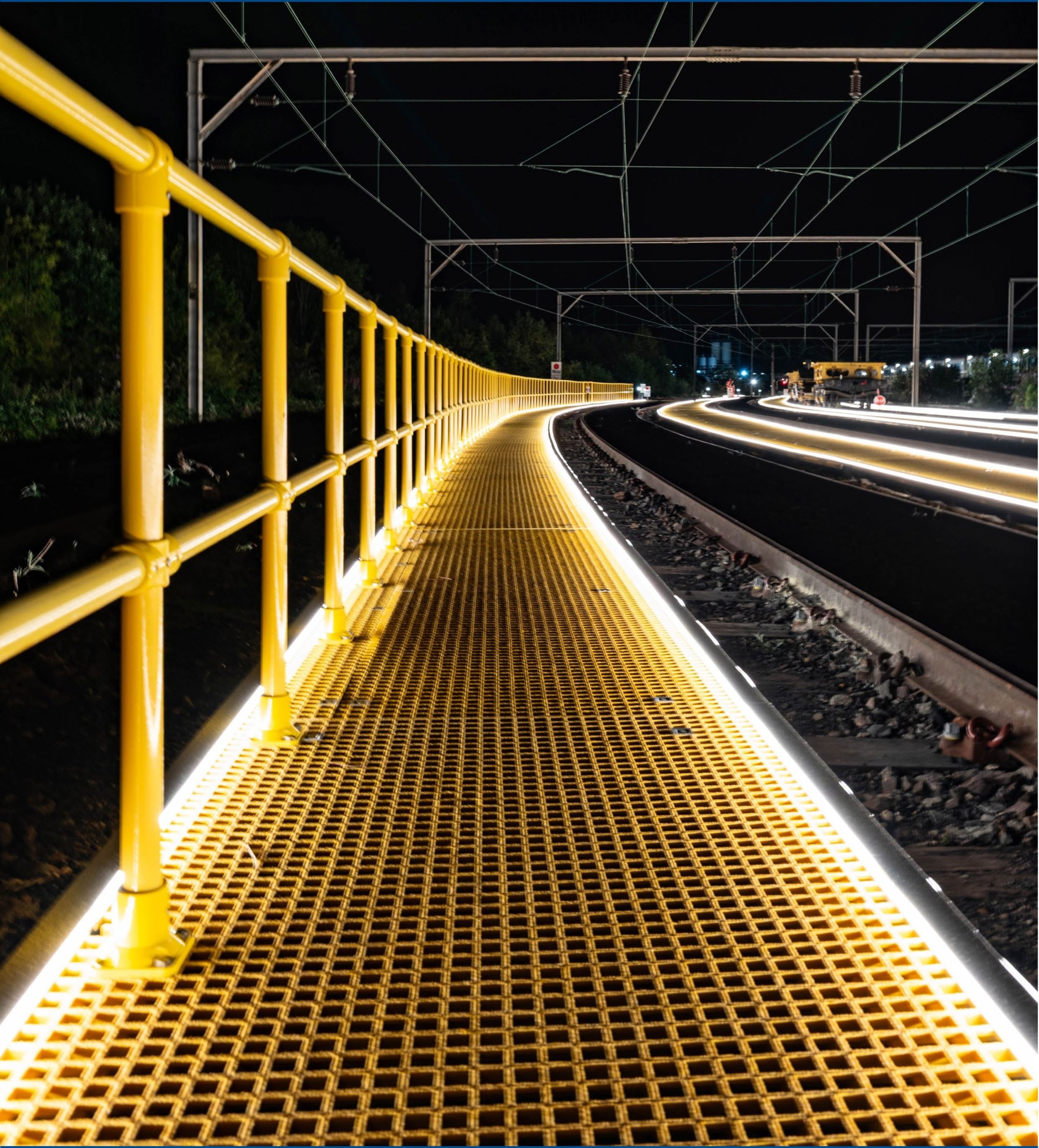
The Challenge at Bletchley
Bletchley Carriage & Freight Sidings presented a typical but critical scenario:
- Insufficient clearance between tracks for conventional lighting infrastructure
- Risk of fouling gauging envelopes
- Operational constraints impacting maintenance activities
- Non-compliant lighting levels across walkways and crossings
- Reliance on temporary mitigation measures for staff safety
The conventional response would have been to compromise, either on compliance, operations, or infrastructure.
Our Approach: Challenging the Default
Rather than forcing a standard solution into a non-standard environment, we redefined the problem:
Lighting does not need to come from above.
By working collaboratively with West Midlands Trains, manufacturers and contractors, we developed a bespoke lighting strategy:
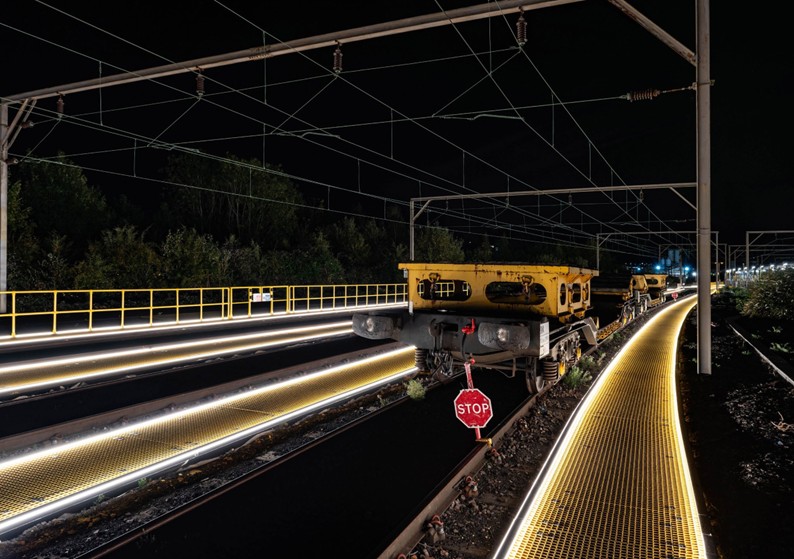
- LED strip lighting integrated directly into GRP walkways
- Horizontal lighting to illuminate walkways to compliant levels
- A controlled 45-degree light distribution washing the train bodyside
- Use of reflective surfaces to enhance uniformity and illuminance
This approach fundamentally changed the lighting geometry, delivering light where it is needed without introducing physical obstructions.
Technical Outcomes
The solution was rigorously designed and validated to ensure:
- Compliance with required illuminance levels and uniformity ratios
- Elimination of shadowing typically associated with low-level lighting
- Compatibility with operational activities including CET and sanding
- No infringement on gauging or track access
Additionally, the system offers benefits in maintainability, energy efficiency, and future adaptability.
Client and End-User Benefits
This innovation removed a long-standing industry trade-off:
- No need to reduce track capacity
- No compromise on operational efficiency
- Improved safety and visibility for staff
- Full compliance with lighting standards
For the end user, the passenger, these behind-the-scenes improvements contribute directly to a more reliable and resilient railway, with fewer operational constraints and improved depot performance.
A Scalable Solution for a Modernising Network
This is not a one-off innovation. Many depots across the UK face similar spatial and operational constraints as fleets modernise.
By rethinking conventional design approaches, this solution can be adapted and deployed across the network, supporting refurbishment programmes without costly or disruptive infrastructure changes.
Leading the Way in Practical Innovation
At SDS, we focus on delivering solutions that work in the real world, balancing compliance, operational needs, and long-term value.
This project demonstrates how early collaboration, engineering insight, and a willingness to challenge assumptions can unlock better outcomes for both clients and end users.
If you are planning depot or siding upgrades, we would welcome the opportunity to share our experience and explore how similar approaches could deliver value on your project.